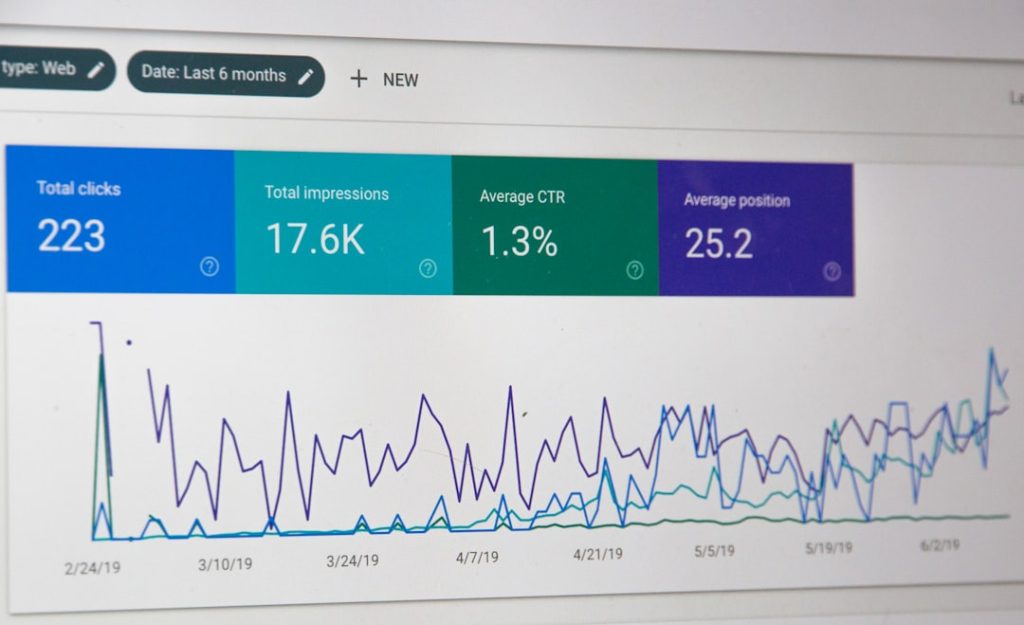
In today’s digital landscape, improving your Google search ranking is critical to business success. Whether you’re running a small e-commerce store, managing a professional service, or building a content-focused platform, your visibility in Google’s search results directly determines how many potential customers find you online.
This comprehensive guide walks you through proven strategies to improve Google search ranking, from technical foundations to content excellence and authority building. By implementing these tactics, you’ll enhance your visibility, drive qualified traffic, and ultimately grow your business.
Why Your Google Search Ranking Matters More Than Ever
Search engine optimization has evolved dramatically over the past decade, but its fundamental importance remains unchanged. Google search ranking determines whether your website appears on page one or gets buried on page five, and the difference is substantial. Ai Chatbots For Customer Acquisition: How Artificial Intelligence Works On Your Website 24/7
Consider this: approximately 68% of online experiences begin with a search engine, according to various digital marketing studies. When users search for products, services, or information related to your business, they’re actively seeking solutions—and they’re most likely to click on results appearing in the top three positions. Automated Lead Generation
“The best place to hide a dead body is page two of Google search results.” This famous SEO saying captures a fundamental truth: if you’re not ranking on the first page, you’re essentially invisible to most potential customers.
The business impact of ranking on page one
Being positioned on Google’s first page isn’t just about vanity—it’s about revenue. Studies show that position one typically captures 28-34% of clicks, position two captures 15-18%, and position three captures 10-14%.
This means that improving your Google search ranking from position 15 to position 5 could theoretically triple or quadruple your organic traffic without spending a single dollar on advertising. For most businesses, organic traffic converts better than paid traffic because users actively searched for your solution.
How search visibility directly affects your bottom line
Organic search traffic is remarkably cost-effective. Unlike paid advertising where you pay for every click, ranking for relevant keywords generates sustainable, long-term traffic that compounds over time.
The key insight: investing in SEO to improve Google search ranking is a long-term investment in your business’s financial health. While results take time to develop, the return on investment typically exceeds paid search and other digital marketing channels.
Technical SEO Fundamentals: The Foundation for Better Rankings
Before Google evaluates your content quality or authority, it must be able to crawl, index, and understand your website efficiently. Technical SEO forms the foundation upon which all other ranking improvements are built.

Without proper technical optimization, even exceptional content will struggle to achieve high rankings. Google’s algorithms need to efficiently discover, crawl, and index your pages while providing an excellent user experience.
Site speed and Core Web Vitals optimization
Page speed is no longer optional—it’s a confirmed ranking factor. Google’s Core Web Vitals specifically measure three critical user experience metrics: Largest Contentful Paint (LCP), First Input Delay (FID), and Cumulative Layout Shift (CLS).
To improve Google search ranking through speed optimization:
- Minimize render-blocking resources by deferring JavaScript and asynchronous loading
- Optimize images through compression, modern formats (WebP), and responsive sizing
- Enable browser caching and leverage Content Delivery Networks (CDNs) for faster global delivery
- Reduce server response time through hosting improvements or database optimization
- Remove unnecessary third-party scripts and monitor their impact on performance
Most sites can improve their Core Web Vitals through these technical improvements, resulting in better rankings and increased user satisfaction.
Mobile-first indexing and responsive design requirements
Mobile-first indexing means Google predominantly uses the mobile version of your site for ranking and indexing. If your mobile experience is poor, your rankings will suffer regardless of desktop performance.
Ensure your website features:
- Responsive design that adapts to all screen sizes automatically
- Readable text without requiring zooming (minimum 16px font size)
- Touch-friendly buttons and navigation spaced appropriately
- Fast mobile loading times (under 3 seconds ideally)
- Mobile-specific optimizations like simplified forms and one-handed usability
Testing your site with Google’s Mobile-Friendly Test tool provides immediate feedback on mobile optimization issues.
XML sitemaps and robots.txt configuration
XML sitemaps help Google discover all your pages efficiently, while robots.txt controls which parts of your site should be crawled.
Proper configuration involves:
- Creating an XML sitemap that lists all important pages with their last-modified dates
- Submitting your sitemap through Google Search Console
- Configuring robots.txt to allow crawling of important pages while blocking duplicate or private content
- Using robots.txt to prevent crawling of parameter-heavy URLs that create crawl waste
- Monitoring crawl statistics in Google Search Console to identify crawl inefficiencies
Keyword Research and Strategy: Finding What Your Audience Searches For
Improving your Google search ranking begins with understanding what your target audience actually searches for. Without proper keyword research, you’ll be optimizing for the wrong terms and missing ranking opportunities.

Keyword research is the foundation of all SEO strategy, informing your content creation, on-page optimization, and link-building efforts.
How to conduct competitive keyword analysis
Start by analyzing which keywords your competitors rank for and which are driving them the most traffic. Tools like Ahrefs, SEMrush, and Moz reveal competitor keyword opportunities you might be missing.
When conducting competitive analysis:
- Identify your top 10 organic competitors in search results
- Analyze their top-performing pages and which keywords drive traffic to them
- Find keyword gaps where competitors rank but you don’t
- Evaluate the search volume, difficulty, and commercial intent of competitor keywords
- Look for content clusters and topic gaps in competitor strategies
This analysis reveals which keywords to prioritize when working to improve Google search ranking.
Long-tail keywords vs. high-volume terms: Which to target
While targeting high-volume keywords sounds appealing, long-tail keywords often deliver better results for most businesses.
Long-tail keywords (3-5+ words) typically have lower search volume but significantly less competition and higher intent. A user searching “best CRM software for small businesses” is further along the buying journey than someone searching “CRM software.”
Your keyword strategy should balance:
- Head terms (high volume, high difficulty) for brand visibility and long-term goals
- Mid-tail keywords (moderate volume, moderate difficulty) for steady traffic and conversions
- Long-tail keywords (low volume, low difficulty) for quick wins and high conversion rates
Keyword intent and matching it to user behavior
Search intent refers to why someone is searching for a particular keyword. Understanding intent ensures you create content that actually satisfies searchers.
Four primary intent types exist:
- Informational intent: Users seeking knowledge or answers (e.g., “how to improve Google search ranking”)
- Navigational intent: Users trying to find a specific website or brand (e.g., “Google Search Console”)
- Commercial intent: Users researching before purchase (e.g., “best SEO tools”)
- Transactional intent: Users ready to purchase (e.g., “buy SEO software”)
Match your content to user intent by examining top-ranking pages for each keyword and creating content that aligns with what searchers actually want.
On-Page SEO Optimization: Making Your Content Rank-Ready
Once you’ve identified your target keywords, on-page SEO optimization involves strategically placing those keywords and signals throughout your page to help Google understand its relevance and value.
On-page factors directly influence whether your pages rank well for your target terms.
Crafting title tags and meta descriptions that drive clicks
Your title tag and meta description appear in search results and significantly impact click-through rates. A compelling title tag should include your primary keyword while accurately describing the page content.
Best practices for title tags:
- Include your primary keyword near the beginning of the title
- Keep titles between 50-60 characters to prevent truncation in search results
- Create unique titles for every page—avoid duplicate titles across your site
- Write for humans first, keywords second; compelling titles generate more clicks
- Include modifiers like “2024,” “Guide,” or “Best” to increase appeal
Meta descriptions should summarize the page content in 155-160 characters while encouraging clicks. Include your primary keyword naturally, but prioritize clarity and persuasion.
Header tag structure and keyword placement strategy
Header tags (H1, H2, H3) organize your content hierarchically and help Google understand your page’s structure and main topics. Your H1 tag should appear once per page and contain your primary keyword.
Proper header structure means:
- One H1 tag per page (typically your main page title)
- Multiple H2 tags for main sections (including variations of your primary keyword)
- H3 tags for subsections within those main topics
- Naturally incorporating your target keyword and related terms in headers
- Avoiding keyword stuffing; headers should read naturally for human readers
This structure helps Google and users understand your content’s organization while signaling topic relevance.
Image optimization and alt text best practices
Images improve user experience and engagement, but unoptimized images hurt site speed and miss ranking opportunities.
| Image Optimization Element | Best Practice | Impact on Rankings |
|---|---|---|
| File Size | Compress to under 100KB without quality loss | Faster page load times, better Core Web Vitals |
| Alt Text | Descriptive, 100-125 characters, include keyword naturally | Improved accessibility, image search rankings |
| File Name | Descriptive with hyphens, e.g., “improve-google-ranking.jpg” | Better image indexing and context understanding |
| Image Format | Use WebP with PNG/JPEG fallback for compatibility | Faster loading, better performance scores |
| Responsive Images | Use srcset to serve optimal size for each device | Mobile optimization, faster delivery |
Alt text serves dual purposes: it describes images for visually impaired users and helps Google understand image content, improving both accessibility and rankings.
Content Quality and E-E-A-T: What Google Really Wants
Google’s ranking algorithms increasingly prioritize E-E-A-T: Experience, Expertise, Authoritativeness, and Trustworthiness. Simply stuffing keywords into mediocre content won’t improve your Google search ranking—you need exceptional, authoritative content.
Quality content that demonstrates expertise and trustworthiness consistently outranks thin, keyword-focused content.
Building expertise and authoritativeness in your niche
Demonstrating expertise means clearly showing that you understand your subject deeply. Author bios, credentials, and content depth all signal expertise to Google.
Build authoritativeness through:
- Creating original research and data specific to your industry
- Publishing detailed case studies showing real results you’ve achieved
- Featuring author credentials and professional background information
- Citing authoritative sources and building relationships with industry leaders
- Consistently publishing high-quality content that demonstrates domain knowledge
When you consistently demonstrate expertise, Google and users alike view you as an authoritative source worth ranking.
Content depth and comprehensiveness for ranking advantage
Content depth correlates strongly with rankings. Comprehensive content covering topics thoroughly tends to outrank shallow, surface-level articles.
However, depth doesn’t mean length for its own sake. Instead, focus on comprehensiveness—covering all important subtopics, answering related questions, and providing thorough examples.
Create comprehensive content by:
- Identifying all common questions users ask about your topic
- Including data, statistics, and examples throughout your content
- Providing actionable recommendations and implementation guidance
- Addressing edge cases, limitations, and caveats honestly
- Including visual elements like charts, infographics, and screenshots
Trustworthiness signals that boost credibility
Trustworthiness is particularly important for topics affecting health, finance, or legal matters (YMYL—Your Money or Your Life). Even for other topics, trust signals improve rankings and user confidence.
Build trust signals through:
- Displaying security certificates and privacy policies prominently
- Including customer reviews and testimonials from verified customers
- Maintaining an updated Google Business Profile with real customer feedback
- Being transparent about your business, ownership, and contact information
- Correcting errors quickly and openly, demonstrating commitment to accuracy
Backlink Strategy: Earning Links That Improve Your Authority
Backlinks remain one of Google’s most important ranking factors. They signal to Google that other authoritative sites find your content valuable enough to reference.
However, not all links are created equal. A single link from a highly authoritative, relevant site is worth more than hundreds of links from low-quality directories.
The difference between high-quality and toxic backlinks
High-quality backlinks share specific characteristics: they come from authoritative sites relevant to your niche, are placed editorially within quality content, and use natural anchor text.
Toxic backlinks, conversely, come from spammy sites, low-quality link networks, or are purchased artificially. Google can penalize sites receiving many toxic backlinks, making backlink quality assessment critical.
Evaluate backlink quality by:
- Checking the referring domain’s authority using Moz DA or Ahrefs DR scores
- Assessing whether the referring site’s content is relevant to your niche
- Examining the linking page’s quality and organic traffic
- Reviewing anchor text distribution for natural variation
- Analyzing the link’s placement within the content (editorial links rank higher)
Use tools like Google Search Console’s Links report to monitor your backlink profile and identify potentially harmful links to disavow.
Guest posting and broken link building tactics
Guest posting allows you to reach new audiences while building authoritative backlinks. However, focus on publications reaching your target audience rather than pursuing high volume.
Quality guest posting guidelines:
- Target publications your ideal customers actually read
- Pitch unique content ideas rather than generic topics
- Write content meeting the publication’s standards and audience expectations
- Include one or two contextual links to your most relevant resources
- Promote the published article and engage with readers in comments
Broken link building involves finding broken links on relevant sites and offering your content as a replacement. This creates a win-win: the site fixes a broken link, and you gain a quality backlink.
Internal linking structure for better crawlability
While backlinks from external sites are important, internal linking helps distribute authority throughout your site and guides Google’s crawlers to important pages.
Effective internal linking strategies:
- Link from high-authority pages (like your homepage) to important target pages
- Use descriptive anchor text that includes your target keywords naturally
- Create topic clusters linking related content together thematically
- Ensure all important pages are reachable within 3-4 clicks from the homepage
- Use breadcrumb navigation to establish clear site hierarchy
Strategic internal linking helps new pages gain authority faster while establishing clear topic relationships that improve rankings across your site.
User Experience Signals: Reducing Bounce Rate and Improving Dwell Time
Google increasingly measures how users interact with your pages. Metrics like bounce rate, time on page, and scroll depth inform Google whether your content satisfies searcher intent.
Improving these user experience signals indirectly improves your Google search ranking by demonstrating content quality and relevance.
Click-through rate optimization through better snippets
Your snippet (the title and meta description shown in search results) directly influences click-through rates. Better snippets mean more clicks, signaling to Google that your page is highly relevant to the search query.
Optimize snippets by:
- Creating title tags emphasizing unique value, not just keywords
- Meta descriptions should create curiosity and clearly indicate content value
- Using data and statistics in titles when relevant (“2024 Guide,” “5 Strategies,” etc.)
- Testing different title variations to identify which generates highest CTR
- Implementing structured data to enable rich snippets with ratings, prices, or availability
Even small improvements in click-through rate can significantly boost your rankings over time.
Page layout and navigation for reduced bounce rates
If users land on your page and immediately leave, Google interprets this as poor relevance. Clean layout, fast loading, and intuitive navigation keep visitors engaged longer.
Reduce bounce rates through:
- Clear value proposition visible above the fold on every page
- Intuitive navigation making it obvious how to find related information
- Logical content structure with descriptive headers guiding readers through your point
- Strategic internal links to related content at relevant points
- Fast loading times so pages display immediately
- Mobile-optimized layouts preventing horizontal scrolling or illegible text
Engagement metrics Google uses to rank pages
While Google doesn’t explicitly state that it tracks individual user engagement metrics like time on page, behavioral signals clearly correlate with rankings.
The metrics most affecting rankings include:
- Click-through rate (CTR): The percentage of searchers clicking your result versus competitors
- Bounce rate: The percentage of users leaving without viewing additional pages
- Dwell time: How long users spend on your page before returning to search results
- Pages per session: How many pages users view during their visit
- Return visitors: How many users return to your site later
Creating engaging content that satisfies searcher intent and encourages further exploration naturally improves these signals.
Local SEO and Schema Markup: Capturing Nearby Customers
For businesses serving specific geographic areas, local SEO is essential for capturing nearby customers actively searching for your services. Simultaneously, schema markup helps Google understand your content’s specific context and meaning.
Google Business Profile optimization for local visibility
Your Google Business Profile is the single most important local SEO asset. It appears in local search results, Google Maps, and the knowledge panel alongside your organic results.
Optimize your Google Business Profile by:
- Claiming your business and verifying ownership through Google’s verification process
- Completing all business information: accurate name, address, phone, hours
- Selecting the most relevant business categories for your services
- Writing a compelling business description incorporating local keywords naturally
- Adding high-quality photos showing your storefront, team, and services
- Regularly posting updates about promotions, events, or new offerings
- Responding promptly to all customer reviews, both positive and negative
Businesses with fully optimized, actively-managed Google Business Profiles consistently rank higher in local search results.
Structured data markup and rich snippets implementation
Schema markup uses standardized code to tell Google exactly what information your page contains—whether it’s a recipe, article, product, or event. This helps Google display rich snippets with additional information like ratings, prices, or cooking time.
Implementing schema markup:
- Use JSON-LD format (preferred by Google) for easy implementation
- Add markup for your content type: Article, Product, Organization, LocalBusiness, etc.
- Include rich snippet elements like ratings, images, and structured data
- Test your markup using Google’s Rich Results Test to ensure proper implementation
- Monitor Search Console’s Rich Results report to track impressions and clicks
Rich snippets can increase click-through rates by 20-30% compared to standard search results, indirectly improving your Google search ranking.
Local citations and directory consistency
Local citations—mentions of your business name, address, and phone number (NAP) on other websites—signal your business legitimacy to Google.
Build local citations through:
- Submitting your business to major directories: Apple Maps, Yelp, Better Business Bureau
- Ensuring NAP information is completely consistent across all citations
- Prioritizing high-authority directories like industry-specific associations
- Gathering citations from local blogs, chambers of commerce, and community sites
- Monitoring citations regularly to ensure information accuracy
NAP consistency is critical—even slight variations between sources confuse Google and weaken your local SEO authority.
Action Plan: Your 30-Day Roadmap to Higher Google Rankings
Understanding SEO theory is valuable, but implementation is what improves your Google search ranking. This 30-day action plan provides a clear roadmap for getting started.
Quick wins you can implement this week
Some improvements provide immediate benefits:
- Audit your current rankings: Use Google Search Console to identify which keywords you currently rank for and at what positions. Note opportunities where you’re on page 2 but could realistically reach page 1.
- Optimize your Google Business Profile: Claim and complete your profile if you haven’t already. This is one of the fastest ways to improve local visibility.
- Fix critical page speed issues: Use Google PageSpeed Insights to identify and address your site’s biggest performance problems.
- Update meta descriptions: Review your top 10 current keywords and craft compelling meta descriptions designed to increase click-through rate.
- Create a list of target keywords: Identify 20-30 keywords you want to rank for within the next 90 days, balancing search volume with ranking difficulty.
Medium-term strategies for sustained ranking growth
These initiatives take 4-12 weeks to show results but create long-term ranking improvements:
- Develop a content calendar creating 4-8 comprehensive, keyword-targeted pieces monthly
- Perform a technical SEO audit and fix all identified issues systematically
- Build a quality backlink strategy through guest posting and relationship building
- Implement schema markup across your site to enable rich snippets
- Create internal linking structure connecting related content thematically
- Develop a reputation management system for gathering and responding to reviews
How to track progress and measure SEO success
Without measurement, you can’t optimize effectively. Track these key metrics monthly:
| Metric | Why It Matters | Where to Track |
|---|---|---|
| Keyword Rankings | Shows improvement for target keywords; primary ranking metric | Google Search Console or SEO tools (Ahrefs, SEMrush, Moz) |
| Organic Traffic | Actual users from search, indicating real-world improvement | Google Analytics 4 |
| Search Impressions | How often you appear in search results, even if not clicked | Google Search Console |
| Click-Through Rate | Percentage of impressions resulting in clicks; shows snippet quality | Google Search Console |
| Backlink Profile | Your authority and link-building progress over time | Ahrefs, Majestic, or Moz |
| Core Web Vitals | Technical performance directly impacting rankings | Google Search Console, PageSpeed Insights |
Review these metrics monthly and adjust your strategy based on what’s working. Some tactics will deliver faster results than others for your specific business.
Frequently Asked Questions About Improving Google Search Rankings
How long does it take to see improvements in Google rankings?
SEO improvements typically require 2-6 months to become visible for competitive keywords, though some quick wins may appear within 2-4 weeks. The timeline depends on keyword competition, your starting position, and the quality of your optimization efforts.
For long-tail keywords with lower competition, you might see improvements within 4-8 weeks. For high-competition keywords, expect 6-12 months of consistent effort before significant ranking improvements occur.
Can I improve rankings without building backlinks?
Yes, you can improve your Google search ranking without backlinks, particularly for less competitive keywords. Focus on exceptional on-page optimization, comprehensive content, excellent user experience, and strong technical SEO.
However, for highly competitive keywords, backlinks become increasingly important. As competition increases, the importance of earning quality backlinks grows. Most competitive niches require both excellent content and a quality backlink profile to achieve top rankings.
What’s the difference between SEO and paid search advertising?
SEO (organic search) involves optimizing your website to rank naturally in search results without paying per click. Results take longer but provide long-term, sustainable traffic.
Paid search advertising (Google Ads) displays your ads above or beside organic results when users search specific keywords. You pay for each click regardless of conversions. Results appear immediately but stop when you stop spending.
Most businesses benefit from combining both: paid search generates immediate visibility and traffic while you build organic rankings through SEO.
Should I focus on organic rankings or Google Ads first?
The best approach depends on your business situation. If you have budget and need immediate revenue, start with Google Ads while building your organic presence through SEO. If you have limited budget, prioritize SEO for sustainable long-term growth.
Many successful strategies use both simultaneously: Google Ads captures immediate demand while SEO builds long-term visibility and reduces your reliance on paid advertising costs.
How can AI tools help improve my Google search ranking?
AI-powered tools can accelerate your SEO efforts significantly. From keyword research and content optimization to technical audits and competitive analysis, AI platforms automate time-consuming tasks while providing data-driven insights.
Tools like RankFlow AI analyze your rankings, competitor strategies, and optimization opportunities, creating actionable recommendations to improve your Google search ranking faster than manual analysis.
However, AI should supplement human expertise, not replace it. Your understanding of your audience, business goals, and niche-specific knowledge remains essential for successful SEO strategy.
Ready to improve your Google search ranking? Implementing even a few of these strategies will likely boost your visibility within 60-90 days. Start with the quick wins this week, then systematically work through the medium-term strategies.
Remember, SEO is an ongoing process, not a one-time project. Consistently creating valuable content, maintaining technical excellence, and building authority will compound over time, establishing your site as a trusted resource in your industry.
Powered by RankFlow AI — aiboostedbusiness.eu