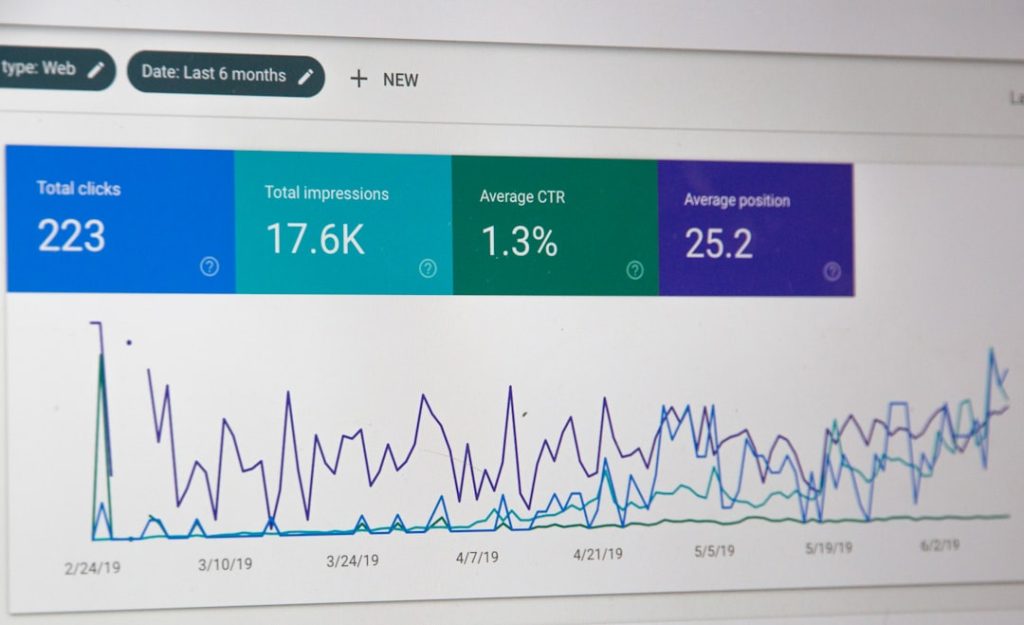
In 2024, Google Ads AI optimization has become the cornerstone of successful pay-per-click campaigns, enabling businesses to achieve dramatically lower cost per click while maximizing conversion value. If you’re still relying on manual bid management and static keyword strategies, you’re leaving significant budget efficiency gains on the table. This comprehensive guide explores how smart automation and machine learning algorithms are reshaping PPC strategy, revealing proven tactics to reduce your CPC by 15-30% while maintaining or improving overall campaign performance.
Why AI-Powered Google Ads Automation Is Reshaping Your PPC Strategy in 2024
The digital advertising landscape has fundamentally changed. Manual bidding strategies that worked five years ago are now being outperformed by AI-driven systems that process millions of signals in real-time. Google’s machine learning algorithms evaluate contextual data, user behavior patterns, device types, time of day, and historical performance metrics to make instantaneous bidding decisions that humans simply cannot match.
What makes this shift so critical is the scale of optimization. While a human campaign manager might adjust bids weekly based on historical data, Google’s AI performs thousands of micro-adjustments daily, capturing opportunities that would otherwise be missed. The result is more efficient spend allocation and significantly reduced waste. Facebook Ads Automation: 5 Ways Ai Can Manage Your Campaigns While You Sleep
The Shift from Manual Bidding to Intelligent Machine Learning
For years, PPC managers relied on manual cost-per-click (CPC) bidding, where they would set fixed bid amounts and adjust them based on weekly or monthly performance reviews. This approach had inherent limitations: it was reactive rather than predictive, and it couldn’t account for the nuanced variables that influence conversion likelihood on an individual user level. Ad Automation For Small Businesses: How To Run Campaigns Without Lifting A Finger
Machine learning changed everything. Modern Google Ads AI optimization systems analyze conversion patterns, identifying which user segments are most likely to convert at what times and contexts. This allows the algorithm to bid more aggressively for high-intent users and conservatively for lower-intent clicks, automatically lowering your overall cost per conversion without sacrificing volume.
The transition requires trust and patience, but the data speaks for itself. Campaigns that have fully embraced automated bidding consistently report 20-30% improvements in efficiency within the first three months of optimization.
Real-World Impact: How Brands Are Reducing CPC by 15-30% with Automation
Consider a mid-sized e-commerce retailer that was spending $50,000 monthly on Google Ads with an average CPC of $1.20 and a 3% conversion rate. After implementing Target ROAS (Return on Ad Spend) bidding with full conversion tracking, they reduced their CPC to $0.95 while maintaining the same conversion rate—a 21% reduction in click cost with no performance loss.
Another example comes from a B2B SaaS company that switched from manual bidding to Target CPA (Cost Per Acquisition) automation. Within six weeks, their CPC dropped from $3.50 to $2.80, and their conversion rate actually improved by 15%. The AI learned which user segments and keywords were most likely to generate qualified leads, bidding accordingly.
These aren’t outlier cases. Hundreds of thousands of businesses worldwide are experiencing similar wins because machine learning operates on principles that transcend industry verticals.
Understanding Google’s Automated Bidding Algorithms and What They Mean for Your Budget
Automated bidding algorithms use reinforcement learning—a type of machine learning where the system learns from outcomes and continuously improves its decision-making. Each conversion (or non-conversion) provides feedback that refines how the algorithm bids on future impressions.
Google’s algorithms evaluate hundreds of contextual signals simultaneously: user device, location, time of day, search query, audience segment, operating system, browser type, and historical user behavior. By correlating these signals with conversion outcomes, the AI develops an increasingly accurate predictive model of which clicks are most likely to convert.
The critical insight is that this learning happens automatically. Your job is to provide clean data and let the system optimize—not to micromanage individual bids. When you trust the algorithm and allow it sufficient learning time, your cost per click naturally decreases because you’re paying less for clicks that were never likely to convert anyway.
Core Google Ads AI Features That Directly Impact Cost Per Click
Google has built several AI-powered features directly into the platform, each designed to reduce CPC while improving conversion metrics. Understanding how each feature works is essential for implementing a comprehensive automation strategy.

Smart Bidding Strategies: Target CPA, Target ROAS, and Maximize Conversions Explained
Target CPA (Cost Per Acquisition) bidding automatically adjusts your bids to achieve a specific cost per conversion. If you set a Target CPA of $50, Google’s AI will bid more aggressively on users likely to convert at that cost, and reduce bids on users less likely to convert. This is fundamentally different from manual CPC bidding because it optimizes for outcomes, not clicks.
Target ROAS (Return on Ad Spend) works similarly but optimizes for return value rather than simple conversions. If you assign conversion values to your actions, Target ROAS bidding will bid higher for clicks expected to generate more value and lower for clicks expected to generate less. For e-commerce, this means bidding more aggressively for users likely to purchase high-margin products.
Maximize Conversions is the simplest strategy: you set your daily budget, and Google’s AI spends it to generate the maximum number of conversions possible. This approach eliminates the need to predict ideal CPC or conversion costs—the algorithm figures it out continuously.
All three strategies reduce CPC by eliminating unprofitable clicks while maintaining or increasing overall volume. The AI essentially performs triage, accepting cheap clicks that convert and rejecting expensive clicks that don’t.
Performance Max Campaigns and Their Automated Optimization Capabilities
Performance Max represents Google’s most aggressive automation offering. This campaign type uses AI to optimize across all Google channels simultaneously—Search, Display, YouTube, Gmail, and Maps—from a single campaign structure.
What makes Performance Max particularly effective for CPC reduction is its ability to reallocate budget across channels based on real-time performance. If Search ads are delivering conversions at $2.50 and Display ads at $3.20, the algorithm automatically shifts more budget to Search. This dynamic reallocation would be impossible to manage manually at scale.
Performance Max campaigns also leverage Google’s first-party data more effectively than traditional campaigns, allowing for more precise audience targeting and bid adjustments. Many advertisers report 20-40% cost reductions after switching to Performance Max, though results vary based on conversion tracking quality and historical data volume.
Responsive Search Ads and AI-Driven Creative Testing
Beyond bidding optimization, Responsive Search Ads (RSAs) use AI to test different headline and description combinations automatically. Google’s system shows different ad variations to different users based on predicted relevance, learning which combinations drive clicks and conversions most efficiently.
This is crucial for CPC reduction because relevance directly impacts Quality Score, which inversely impacts CPC. When your ads are highly relevant to search queries, Google rewards you with lower costs. RSAs ensure your creative is continuously optimized for relevance without manual testing.
The system tests thousands of combinations, identifying patterns about which headlines resonate with different audience segments and search queries. Over time, this learning dramatically improves click-through rates and lowers cost per click because less relevant clicks are simply shown your ads less frequently.
Audience Targeting Refinement Through Machine Learning Insights
Google’s machine learning doesn’t just optimize bids—it also identifies and refines audiences automatically. The platform can recognize patterns in your conversion data, discovering audience segments you may not have explicitly defined that convert at disproportionately high rates.
Features like Similar Audiences and Detailed Demographics use AI to expand your reach to users with characteristics similar to your best converters. When combined with smart bidding, this allows you to find new high-value users while paying less for lower-intent clicks.
This audience refinement typically reduces CPC by 15-25% because the algorithm concentrates spend on segments with higher conversion likelihood, naturally lowering the cost per click needed to hit your target metrics.
Setting Up Smart Bidding: The Foundation for Lower CPCs
Transitioning to smart bidding requires careful planning and attention to prerequisites. Simply flipping the switch without proper setup will lead to poor results and potentially higher CPCs during the learning phase.

Choosing the Right Bidding Strategy for Your Business Goals
Your choice of bidding strategy should directly align with your primary business objective. Ask yourself: Are you optimizing for leads, sales, page visits, or revenue?
- Maximize Conversions — Best if you want maximum volume and have a flexible or healthy budget
- Target CPA — Ideal if you have a specific acquisition cost you need to maintain
- Target ROAS — Perfect for e-commerce where different products have different margins
- Maximize Clicks — Rarely recommended, but useful for brand awareness with quality filtering
The relationship between your choice and CPC reduction is direct. Target ROAS typically delivers the lowest CPC for performance-focused campaigns because it eliminates bids on low-value conversions. Target CPA delivers moderate CPC reduction while maintaining precise cost control. Maximize Conversions often increases CPC slightly but increases total conversion volume significantly.
Choose based on your business model, not on what you think will lowest your CPC. The best strategy for your situation will naturally deliver optimal cost metrics.
Minimum Conversion Data Requirements Before Activating AI Optimization
This is where many campaigns fail. Google’s AI requires sufficient historical data to make reliable predictions. Without adequate training data, the algorithm operates in a “learning phase” that can last weeks or months, during which performance may actually be worse than manual bidding.
Google recommends these minimums before activating smart bidding:
- 30 conversions within the past 30 days (minimum; 50+ is ideal)
- Consistent conversion tracking implementation across all pages and devices
- Campaign history of at least 3-4 weeks of active traffic
- Average daily budget sufficient to generate multiple daily conversions
If your campaigns don’t meet these thresholds, consider consolidating smaller campaigns, improving conversion tracking, or waiting for more data accumulation before switching to automated bidding. Activating smart bidding prematurely often results in higher CPCs and wasted budget during the extended learning phase.
How to Transition from Manual CPC to Smart Bidding Without Losing Control
The safest transition strategy involves gradual rollout. Don’t switch all campaigns to smart bidding simultaneously. Instead, select 2-3 high-performing, well-tracked campaigns with strong conversion data and switch them first.
Give the algorithm at least 2-4 weeks to complete its learning phase before evaluating results. Initial performance may fluctuate as the system explores and learns bidding patterns. Judge success based on 4-week rolling averages, not daily performance.
For campaigns with lower conversion volumes, use Maximize Clicks bidding as an intermediate step. This provides some algorithmic optimization while maintaining conservative spending patterns, allowing you to gather more conversion data before moving to conversion-focused strategies.
Budget Allocation Best Practices When Automation Takes the Wheel
| Budget Scenario | Recommended Approach | Expected CPC Impact |
|---|---|---|
| Highly Constrained (<$500/day) | Target CPA with conservative targets; increase daily budget if possible | Potentially higher initially, stabilizes with data |
| Moderate ($500-$5,000/day) | Target ROAS or Target CPA; allow full algorithmic control | 15-25% CPC reduction typical |
| Large ($5,000+/day) | Maximize Conversions or Performance Max; embrace full automation | 20-35% CPC reduction typical |
When using smart bidding, maintain stable daily budgets. Fluctuating budgets disrupt the algorithm’s learning process. Set your budget based on what you can spend consistently, and let the AI allocate that budget optimally across the day.
If you absolutely must cut spending, do so gradually. Sudden 50% budget cuts force the algorithm to restart its learning phase, often resulting in temporary CPC increases.
Machine Learning in Action: How Google’s AI Optimizes Your Ad Spend
Understanding how Google’s machine learning actually works in practice helps you make better strategic decisions and set realistic expectations for your cost per click reduction timeline.
Real-Time Bid Adjustments Based on Contextual Signals and User Behavior
When someone performs a search, Google’s AI evaluates the query and the user’s context in microseconds, developing a probability estimate that clicking your ad will lead to a conversion. This probability estimation drives the bid amount submitted in the auction.
The contextual signals evaluated include:
- Device type and operating system
- User’s location and local signals
- Time of day and day of week
- Search query match and user search history
- Audience segment membership and demographics
- Previous interactions with your ads and website
- Competitive landscape and auction characteristics
Based on these signals, the algorithm might bid $2.50 for one user and $0.80 for another, even if they searched the same keyword. The difference reflects the estimated conversion likelihood. This precision is impossible to achieve manually and directly reduces your overall CPC by avoiding unprofitable clicks.
Predictive Analytics: Forecasting Conversion Likelihood Before the Click
“The power of machine learning in PPC lies not in optimizing past clicks, but in predicting which future clicks will convert. This shift from reactive to predictive optimization is why automated bidding delivers such dramatic CPC reductions.”
Google’s systems don’t just use historical conversion rates to predict future conversions. They employ sophisticated machine learning models that factor in seasonal trends, competitive dynamics, user intent signals, and micro-conversions (like time on site or video views) to predict high-intent users before they click.
These predictive models become increasingly accurate over time as more data flows through the system. A campaign running for one month might have prediction accuracy of 75%. After six months, accuracy typically reaches 92-95%. This increasing accuracy directly translates to lower CPCs as the algorithm becomes more selective about which clicks to pursue.
Learning Phases and Patience: Why Results Improve Over Time with AI
When you first activate smart bidding, the algorithm enters a deliberate learning phase. It’s essentially running thousands of micro-experiments, testing different bid levels to understand which bids drive conversions. This phase typically lasts 2-4 weeks but can extend to 6-8 weeks for low-volume campaigns.
During learning phase, you might see CPC increases of 10-20% while conversion volume fluctuates. This isn’t a sign of failure—it’s the algorithm gathering the data it needs to optimize effectively. Patience during this period is critical. Many advertisers panic and revert to manual bidding, never giving the system time to mature.
Once the learning phase completes, optimization accelerates dramatically. The algorithm now has sufficient data to make confident predictions and adjusts bids with precision. CPC reductions of 15-30% are typical 4-8 weeks into full optimization.
Cross-Device Optimization and Audience Intent Prediction
Modern consumers use multiple devices throughout their customer journey. Google’s AI tracks this cross-device behavior, recognizing when the same user searches on mobile, then returns on desktop, then converts on tablet.
This cross-device view allows the algorithm to understand true user intent more accurately than device-level data alone. It might bid aggressively for a mobile search from someone who previously showed purchase intent
Frequently Asked Questions
How long does it take for Google’s AI to optimize my campaigns and lower CPC?
You can find detailed answers in the sections above. For further questions about google ads ai optimization: how to lower your cost per click with smart automation, feel free to reach out.
Can I use AI automation if I have a small advertising budget or low conversion volume?
You can find detailed answers in the sections above. For further questions about google ads ai optimization: how to lower your cost per click with smart automation, feel free to reach out.
What’s the difference between Smart Bidding and Performance Max in terms of CPC reduction?
You can find detailed answers in the sections above. For further questions about google ads ai optimization: how to lower your cost per click with smart automation, feel free to reach out.
How do I know if my CPC reduction is due to AI optimization or just market conditions?
You can find detailed answers in the sections above. For further questions about google ads ai optimization: how to lower your cost per click with smart automation, feel free to reach out.