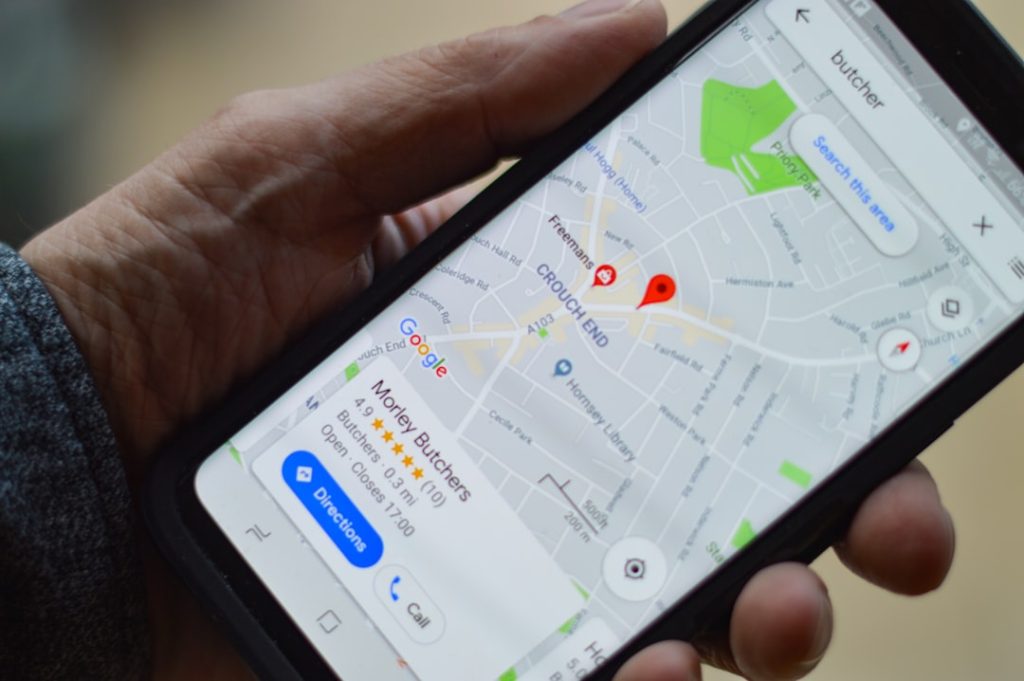
In today’s digital landscape, local SEO for small businesses: how to get found by nearby customers on Google has become essential for survival and growth. More than 70% of consumers use Google to find local businesses, and if your small business isn’t optimized for local search, your competitors are capturing those nearby customers right now. This comprehensive guide will show you exactly how to dominate local search results and turn nearby Google searches into paying customers.
Why Local SEO Matters More Than Ever for Small Business Growth
The way customers search for businesses has fundamentally changed. People no longer rely solely on word-of-mouth or phone directories—they’re searching “plumber near me” or “best coffee shop in [neighborhood]” on their mobile devices every single day.
Local search has become the primary discovery channel for small businesses. Studies show that Google processes over 8.5 billion searches daily, with a significant portion being location-based queries. For small business owners, this represents an unprecedented opportunity to connect with customers actively searching for exactly what you offer.
The shift toward local search behavior among consumers
Consumer behavior has shifted dramatically toward mobile-first, location-based searching. When someone needs a service or product, their first instinct is to pull out their phone and search locally rather than driving around or asking for recommendations. Social Media Strategy For Small Businesses: A Step-By-Step Guide From Scratch
This behavioral shift means that local search optimization isn’t optional—it’s fundamental to your marketing strategy. Mobile searches with local intent convert at higher rates because the searcher is actively looking to take action now, not someday. Search Engine Optimization Basics
Younger demographics especially rely on Google Maps and local search to discover new businesses. If you’re not visible in these searches, you’re invisible to an entire segment of potential customers in your area.
How local SEO directly impacts your bottom line
The connection between local search visibility and revenue is direct and measurable. Small businesses that rank in the Google Local Pack (the three map results shown at the top of search results) receive 33% of all clicks from local search queries.
Consider a plumbing company in a medium-sized city. If they rank in the top three local results for “emergency plumber near me,” they’ll receive consistent customer inquiries simply from being visible when people need their services most. This traffic is highly qualified and ready to convert.
The ROI on local SEO is exceptional because you’re not paying per click like Google Ads—you’re investing in organic visibility that generates ongoing traffic without continuous ad spend.
The competitive advantage of ranking locally before your competitors do
Right now, your local competitors are either investing in local SEO or they’re not. The ones who are moving ahead, capturing customer inquiries, and building trust in your community. The good news is that local SEO moves relatively quickly compared to broader organic SEO—you can see meaningful results within 60-90 days.
Getting ahead of your competitors now creates a compounding advantage. As your visibility increases, you collect more reviews, generate more local citations, and build more local authority. This makes it progressively harder for competitors to catch up.
Understanding Google Local Search: Map Pack and Local Finder Basics
Before you can optimize for local search, you need to understand how Google presents local business results. The landscape consists of several distinct components that all feed into how customers find you.

What the Google Local Pack is and why it matters
The Google Local Pack refers to the three business listings displayed prominently at the top of Google search results when someone searches for a local service or product. These results appear alongside a Google Map showing the businesses’ locations.
Getting into the Local Pack is incredibly valuable because these three positions capture approximately 33% of all clicks from local search results. The organic results that appear below the Local Pack receive far fewer clicks.
For small business owners, claiming a spot in the Local Pack should be your primary local SEO goal. This is where the traffic and customer inquiries are concentrated.
How Google determines local search results
Google uses a complex algorithm to determine which businesses appear in local search results. The three main ranking factors are relevance, distance, and prominence.
- Relevance measures how well your business information matches what the searcher is looking for. This includes your business category, the keywords on your website, and your Google Business Profile completeness.
- Distance considers how far your business is from the searcher’s location. If someone searches “dentist near me,” Google prioritizes results geographically close to them.
- Prominence reflects your business’s reputation and authority in your area, based on review quantity and quality, citations, and your overall web presence.
Understanding these factors helps you focus your efforts on what actually matters. You can’t change your distance from customers, but you can absolutely improve relevance and prominence.
The difference between organic local results and paid local ads
Below the Local Pack, Google displays organic local search results ranked by traditional SEO factors. These results are free traffic, though they receive fewer clicks than the Local Pack positions.
Google Ads for local businesses (Google Local Services Ads) appear above the Local Pack and require paid investment. While these ads can generate quick results, they’re not a substitute for organic local SEO optimization.
Smart small business owners combine both approaches: they optimize for organic local SEO to build long-term, sustainable traffic, and they may use local ads for immediate visibility while their organic rankings improve.
Claim and Optimize Your Google Business Profile for Maximum Visibility
Your Google Business Profile is the single most important asset for local SEO. This is where all your local search visibility begins, so optimizing it thoroughly should be your first priority.

Step-by-step process to claim your business on Google
If you haven’t claimed your Google Business Profile yet, this is your immediate action item. Visit Google Business Profile and search for your business. If it exists, click “Manage this business” to claim it. If it doesn’t exist, create a new listing.
- Go to google.com/business and sign in with your Google account (create one if needed)
- Search for your business by name and address
- If found, select your business and click “Is this your business?”
- Verify your business ownership through the verification method Google offers (usually postcard sent to your address)
- Complete all business information fields thoroughly
The verification process typically takes 1-2 weeks. During this time, you can begin filling out your profile completely.
Essential information to include for local search success
Every field in your Google Business Profile impacts your visibility. Leave nothing blank—Google rewards complete, detailed profiles with better rankings.
- Business name: Use your exact legal business name without keyword stuffing
- Category: Select the most accurate primary category plus up to 10 additional categories
- Address and service areas: If you serve multiple neighborhoods, list all areas you serve
- Phone number: Include a local phone number that actually routes to your business
- Website: Link to your main website or a specific landing page optimized for local keywords
- Hours: Accurately list your business hours, including holidays and special hours
- Description: Write a compelling 750-character description using local keywords naturally
- Photos: Upload 20+ high-quality photos of your business, products, team, and happy customers
Many small business owners underestimate the importance of a quality business description. This is your chance to explain what you do, who you serve, and why customers should choose you.
How to verify your business and maintain active status
Once you receive the verification postcard from Google, follow the instructions to complete verification. This confirms you’re the legitimate business owner and gives you full profile management access.
After verification, keep your profile active and updated constantly. Google rewards businesses that regularly update their information, add fresh photos, and post updates. Treat your Google Business Profile as a living document, not something you set once and forget.
Update your profile at least monthly with new photos, seasonal services, or special promotions. This signals to Google that your business is active and engaged with customers.
Common optimization mistakes that hurt your rankings
Many small businesses sabotage their own local SEO without realizing it. Avoid these critical mistakes that directly harm your visibility.
- Using inconsistent business names across profiles and the web (this damages your “local authority”)
- Listing incorrect or outdated phone numbers or addresses
- Leaving the business description blank or writing it like a robot
- Uploading low-quality, blurry, or stock photos instead of real business images
- Ignoring reviews and customer Q&A on your profile
- Adding irrelevant categories that don’t match your actual business
- Not responding to customer questions posted on your profile
These mistakes are easily avoidable once you understand how they impact your local rankings. Spend the time now to get your profile perfect.
Local Keyword Research and Strategy for Small Business Owners
Ranking for any keyword requires that people are actually searching for it. In local SEO, understanding what your nearby customers are searching for is critical to your strategy.
How to find local search terms your customers are actually using
Local keyword research differs from traditional keyword research because you’re looking for location-specific intent. Someone searching “pizza delivery downtown” has different intent than someone searching “best Italian restaurant in [your city].”
Start by listing every service or product your business offers. Then, for each one, add your city, neighborhood, or region. These combinations form the foundation of your local keyword strategy.
Next, use Google Keyword Planner (free with a Google Ads account) to check search volumes for your location-based keywords. This shows you which terms people actually search for in your area.
Long-tail local keywords that convert better than generic terms
Long-tail keywords are longer, more specific phrases that face less competition. In local SEO, long-tail keywords often convert better because they indicate higher purchase intent.
For example, a plumber might target:
- “plumber near me” (very competitive, low intent clarity)
- “emergency plumber in [city]” (more specific, higher intent)
- “affordable water heater repair in [neighborhood]” (highly specific, highest intent)
The third option has much lower search volume, but the person searching is more likely to call and convert. Don’t ignore long-tail local keywords—they’re your path to attracting ready-to-buy customers with less competition.
Tools and techniques to uncover neighborhood-specific search intent
Look at what Google itself suggests when you search for your services locally. Google’s autocomplete feature shows actual searches people are performing. These are goldmines for local keyword ideas.
Additionally, check review sites and directory listings in your industry. Look at what language customers use when describing what they need. This natural language often reveals search terms you might not have considered.
Speaking with your sales team or reading customer messages reveals what words people use when contacting you. This real-world feedback is more valuable than any tool.
Creating a local keyword map for multiple service areas
If you serve multiple neighborhoods or cities, create a spreadsheet mapping your services to specific locations. This becomes your content strategy roadmap.
For each location, identify 10-20 relevant keywords combining your services with that location. This keyword map guides your content creation, page optimization, and paid advertising strategy. Keep this document updated as you learn what keywords actually drive conversions in each area.
Building Local Backlinks and Citations That Google Actually Values
In local SEO, local citations are mentions of your business name, address, and phone number on other websites. These citations signal to Google that you’re a legitimate, established business in your area.
What local citations are and why consistency across directories matters
When your business information appears consistently across multiple authoritative directories, Google gains confidence in your legitimacy and relevance. Inconsistencies (like different phone numbers or address formats) actually hurt your rankings.
Think of citations as votes of confidence from your community. Each consistent citation tells Google, “This business exists and is trusted by our directory.”
The key word is consistency. Your business name, address, and phone number must be identical everywhere they appear. Even small variations like “Suite 100” vs “Ste 100” can be flagged as inconsistencies.
Top local directories and review sites for your industry
| Directory/Site | Best For | Priority | Free or Paid |
|---|---|---|---|
| Google Business Profile | All local businesses | Critical | Free |
| Google Maps | Location-based visibility | Critical | Free |
| Yelp | Restaurants, services, retail | High | Free (with ads available) |
| Apple Maps | iOS users, broader audience | High | Free |
| Facebook Business Page | All industries, community building | High | Free |
| LinkedIn (B2B) | Professional services, B2B | Medium | Free |
| Industry-specific directories | Varies by industry | Medium | Usually free, sometimes paid |
| Nextdoor | Local community awareness | Medium | Free |
| Local chamber of commerce | Community credibility | Medium | Usually paid membership |
| BBB (Better Business Bureau) | Trust and credibility | Medium | Free listing, paid profile |
The directories you should prioritize depend on your industry. A restaurant benefits most from Yelp, while a B2B service company might prioritize LinkedIn and industry-specific directories.
How to build quality backlinks from community sources
Beyond citations in directories, local backlinks from community sources strengthen your authority. These include links from local news sites, community blogs, chamber of commerce, local nonprofits, and neighborhood websites.
Build these relationships authentically: sponsor local events, contribute to community fundraisers, and engage with local organizations. When you’re genuinely involved in your community, earning local backlinks happens naturally.
Write guest posts for local blogs, get featured in local news coverage, and become a resource expert for your community. These activities generate both backlinks and local authority simultaneously.
Monitoring and fixing citation inconsistencies
Use free tools like Whitespark’s local citation finder to identify where your business is listed and check for inconsistencies. Inconsistent citations damage your local rankings significantly.
Create a spreadsheet tracking each citation location and the exact information listed there. Systematically correct any inconsistencies. This becomes easier if you’re consistent everywhere moving forward.
Quarterly, audit your citations to catch any new listings with incorrect information. Proactive monitoring prevents these ranking-damaging mistakes.
Local Directory and Review Site Optimization: Your Complete Checklist
Customer reviews are now a ranking factor in Google’s local algorithm. More importantly, they directly influence whether people choose your business or a competitor’s.
Why review sites impact local search rankings
Review quantity and quality matter to Google’s local algorithm. Businesses with more reviews, higher average ratings, and more recent reviews rank better in local search results.
Beyond rankings, reviews directly persuade people to contact your business. A business with 50 five-star reviews will convert far more searchers than a competitor with 5 reviews, regardless of ranking position.
Building a strong review presence takes consistent effort, but the payoff is substantial—both in rankings and in customer conversions.
Step-by-step setup for industry-specific directories
Different industries have different directory priorities. A dentist should prioritize Healthgrades and Zocdoc. A restaurant should focus on OpenTable and Yelp. A service provider should target Home Advisor or Angi.
Research which directories your potential customers use in your industry. Set up complete profiles on each one, using consistent business information everywhere.
Optimize each profile like you’d optimize your Google Business Profile: complete all available information, upload high-quality photos, and craft compelling descriptions highlighting your unique value.
Encouraging customer reviews without violating platform policies
You can encourage customers to leave reviews, but you must do it correctly. Every platform has policies about how you can request reviews.
- Send a follow-up email after purchase asking customers to share their experience on Google
- Include a review link in your invoice or receipt
- Display signage in your physical location directing customers to review you online
- Train your staff to politely ask satisfied customers to leave reviews
- Make leaving a review easy by providing direct links in SMS, email, or on your website
Never incentivize reviews with discounts or rewards—this violates platform policies and can get your reviews removed. Instead, ask customers to share their honest experience and make it easy for them to do so.
Responding to negative reviews in ways that build trust
How you respond to negative reviews matters more than the reviews themselves. Potential customers expect to see some negative feedback; they look at how you handle it.
Respond to every negative review professionally and helpfully. Apologize for their poor experience, take responsibility when appropriate, and offer a solution. Keep responses concise and genuine.
Responses that seem scripted or dismissive make your business look bad. Show that you care about customer satisfaction by addressing specific concerns mentioned in the review.
Creating Location-Based Content That Ranks and Converts
Content is the engine that drives local SEO results. The right content strategy attracts local traffic, builds local authority, and converts visitors into customers.
Content strategies specific to local search intent
Local content focuses on answering questions your nearby customers are asking. If you’re a contractor, create content about “how to prepare for a bathroom remodel,” not generic renovation advice.
Your content should solve problems and answer questions searchers have before they’re ready to buy. This builds trust and establishes you as the local expert.
Target long-tail local keywords in your content. A blog post about “how to choose a plumber in [city]” targets local intent more effectively than generic “how to choose a plumber” content.
How to create location pages that don’t look thin or spammy
Location pages for multiple service areas are valuable in local SEO, but they must be unique and valuable, not duplicated templates. Google penalizes “thin” location pages that are just copies of a template with city names swapped.
Each location page should include:
- Unique content about that specific location (local history, demographics, local challenges)
- Service-specific information relevant to that area
- Local testimonials or case studies from customers in that area
- Embedded Google Map showing your service area
- Links to other local resources and community information
- At least 400-500 unique words that aren’t repeated on other location pages
Quality location pages can rank for “service + location” keywords and drive significant local traffic. Invest in making them genuinely useful rather than template-driven.
Blog topics and formats that drive local traffic
Blog content is one of the most underutilized local SEO assets for small businesses. Local blog posts that solve customer problems rank well and drive qualified traffic.
Create blog posts around local questions your customers ask: “What permits do I need for a home renovation in [city]?”, “How does [local weather condition] affect roofing choices?”, “Why [local neighborhood] is a great place to open a retail business.”
Beyond blog posts, consider creating local guides, comparison posts, and how-to content that specifically addresses your area. This specialized content ranks well for local long-tail keywords.
Using local events and seasonal trends in your content strategy
Local events create content opportunities that connect you with your community. Write about how your business participates in local festivals, sponsor community sports teams, or host educational workshops.
Seasonal content tied to your area performs well. A home services company in a cold climate can create content about “winter preparation tips” in September, driving timely traffic from people searching for seasonal help.
Create an editorial calendar that aligns content production with local seasons, events, and holidays. This keeps your content calendar full and ensures you’re answering questions people are actively searching for.
Tracking Local SEO Performance: Metrics That Matter to Your Business
Measurement is where local SEO strategy connects to business results. Tracking the right metrics shows you what’s working and where to adjust your strategy.
Essential KPIs for measuring local SEO success
Focus on metrics that directly impact your business goals. Vanity metrics like rankings mean nothing if they don’t translate to customer action.
- Local search impressions: How many times your business appears in local search results
- Local search clicks: How many people click through from local results to your website or call you
- Local search click-through rate: The percentage of impressions that result in clicks
- Call volume from local search: How many customers call you from finding you in local results
- Location visits: How many people visit your physical location after finding you in local search
- Customer acquisition cost from local search: How much you spent to acquire each local customer
- Review volume and rating: How your review presence changes over time
- Local keyword rankings: Your positions for target local keywords (15-30 keywords to track)
The most important metric is connecting local search visibility to actual revenue. Can you track a customer from Google search to purchase? That’s the connection that proves local SEO ROI.
You can’t improve what you don’t measure. Small businesses that track their local search visibility and connect it directly to customer actions see an average 3-5x return on their local SEO investment within the first six months.
Google Search Console and Google Analytics for local tracking
Google Search Console is your primary tool for tracking local search performance. It shows you exactly which local searches bring people to your website, what position you rank for, and your click-through rate.
Filter Search Console data by location (if you serve multiple areas) to see which locations drive the most traffic. This reveals where your local SEO efforts are working best.
In Google Analytics, create segments for local traffic to track how local search visitors behave differently than other traffic. Do they spend more time on your site? Do they convert at higher rates? Understanding this behavior guides your optimization.
Tools to monitor rankings in specific geographic areas
Google Search Console shows your rankings, but dedicated rank-tracking tools designed for local SEO provide better geographic specificity. Tools like BrightLocal, Semrush, and Ahrefs let you track rankings for specific cities and neighborhoods.
Track 15-30 of your most important local keywords across different locations. This gives you a clear picture of your local SEO progress over time.
Set up monthly reports tracking these metrics. Seeing trends over months reveals whether your local SEO strategy is working or needs adjustment.
Connecting local search visibility to actual customer conversions
The ultimate measure of local SEO success is customer acquisition. Set up phone call tracking to know when customers find you through local search and call your business.
If you have a physical location, use Google Analytics location data to see how many people visit after searching for you locally. You can even integrate offline conversion tracking if you have CRM data.
The small business that tracks local search visibility to actual sales revenue knows exactly what their local SEO investment returns. That’s the measurement framework that matters.
Quick Wins and Action Items to Start Ranking Locally This Month
You don’t need perfect execution of every local SEO strategy to see results. Some actions deliver outsized impact quickly. Focus on these high-leverage tasks first.
The five highest-impact steps you can take immediately
- Claim and optimize your Google Business Profile. If you haven’t done this yet, it’s your number-one priority. Complete every field thoroughly, add 20+ quality photos, and write a compelling business description using local keywords.
- Fix citation inconsistencies. Audit your business name, address, and phone number across Yelp, Apple Maps, Facebook, and your website. Ensure they match exactly everywhere.
- Get your first 10 customer reviews. Ask satisfied recent customers to leave Google reviews. These initial reviews have outsized impact on your rankings and conversion rate.
- Create one location page or local blog post. Write a unique 500+ word page targeting a local long-tail keyword. This content will rank and drive qualified local traffic.
- Set up Google Search Console tracking. Connect Google Search Console to your website and track which local searches bring you traffic. This data guides everything else.
These five actions take 10-15 hours of work but deliver 80% of the local SEO benefits you’d get from a comprehensive strategy.
Timeline for realistic local SEO improvements
Local SEO moves faster than broad organic SEO, but it still takes time. Here’s a realistic timeline:
- Weeks 1-4: Claim and optimize Google Business Profile. Fix citations. Begin earning first reviews. These actions show immediate impact on visibility.
- Weeks 5-8: Your optimized profile gains ranking momentum. Local search traffic increases. You begin seeing ranking improvements for target keywords.
- Weeks 9-12: Quality content starts ranking. Review volume accumulates, improving your ratings. Local search traffic continues increasing.
- Months 4-6: Ranking improvements accelerate. You’re now in contention for top local positions. You should see 2-3x increase in local search traffic from month one baseline.
Some high-authority businesses see results faster. Others with competitive niches see slower progress. Consistency matters more than speed.
How to prioritize if you have multiple locations
If you operate multiple locations, start with your highest-revenue location. Perfect execution at one location creates a model you can replicate at others.
Once that location is ranking well and generating traffic, move to your second location. This staged approach is more manageable than trying to optimize everywhere simultaneously.
Use learnings from your first location to accelerate results at subsequent locations. Each location’s optimization becomes easier as you refine your process.
Avoiding common mistakes that set back your progress
Small mistakes in local SEO can erase months of progress. Avoid these critical pitfalls:
- Changing your business address or phone number without updating it everywhere
- Using inconsistent business names across different platforms
- Ignoring customer reviews or responding defensively to criticism
- Creating thin, duplicated location pages that look spammy
- Buying fake reviews or incentivizing reviews improperly
- Neglecting your Google Business Profile after optimization
- Targeting irrelevant keywords instead of high-intent local searches
These mistakes are easily avoidable with awareness. Stay consistent, play by the rules, and focus on genuine customer value.
Frequently Asked Questions About Local SEO for Small Businesses
How long does it take to rank in local search results?
Most small businesses see meaningful local search results within 60-90 days of starting local SEO efforts. Your optimized Google Business Profile can start showing in local search results immediately after verification, though higher rankings take longer.
Timeline depends on how competitive your market is, how thoroughly you optimize, and how much local authority you have. In less competitive markets, results appear faster. In highly competitive markets, reaching top positions takes 4-6 months.
Consistency is more important than speed. Small businesses that maintain local SEO efforts monthly see compounding results, while those that do it once and forget see plateaus.
Do I need to have a physical storefront to benefit from local SEO?
No. Service-based businesses without physical storefronts benefit enormously from local SEO. A plumber, electrician, consultant, or contractor serving a specific area can rank locally even without a shop location.
Google allows service area businesses to list their service territory instead of a physical address. This is perfect for mobile service businesses. You specify that you serve “Dallas, TX and surrounding areas” instead of listing a shop address.
Whether you have a physical location or serve a geographic area, local SEO optimization applies to your business.
What’s the difference between local SEO and Google Ads for local businesses?
Local SEO generates organic, unpaid visibility in local search results. Google Ads (Google Local Services Ads) are paid advertising that appears above local search results. Both drive local customers, but through different mechanisms.
Local SEO requires upfront optimization work but generates ongoing traffic without continuous ad spend. Google Ads generates immediate visibility but stops when you stop paying.
The ideal strategy combines both: use Google Ads while building organic local SEO, then focus more on organic as your rankings improve and ad costs become less efficient.
How often should I update my Google Business Profile information?
Update your Google Business Profile monthly at minimum. Add new photos, post updates about promotions or seasonal services, and refresh your profile information.
Google rewards active, recently-updated profiles with better rankings. Businesses that update weekly rank better than those that update monthly, which rank better than those that never update after the initial setup.
Treat your profile as a living document that evolves with your business. New photos, updated services, and fresh posts signal activity and engagement to Google and to customers.
Can I do local SEO myself, or should I hire an agency?
Many small business owners successfully execute local SEO themselves, especially using this guide’s step-by-step processes. The main challenge is consistency and technical knowledge, not complexity.
DIY local SEO works well if you have a few hours monthly to invest. Hiring an agency makes sense if you have multiple locations, very competitive markets, or limited time to manage marketing yourself.
If you’re just starting local SEO and have limited budget, DIY is viable. Once you’re seeing results and scaling, professional help accelerates progress significantly.
Ready to dominate your local search results? Start with the action items outlined in this guide: claim your Google Business Profile, fix citations, collect reviews, and create local content. These foundational steps position your small business to attract nearby customers actively searching on Google.
Local SEO is one of the highest-ROI marketing strategies available to small businesses. Unlike broader SEO or digital advertising, local optimization directly connects you with customers in your geographic area who are ready to buy right now.
Powered by RankFlow AI — aiboostedbusiness.eu, this guide gives you the strategic framework and tactical steps to build local search dominance. Your competitors may already be optimizing—but with focused effort on these proven strategies, you can capture that local search traffic and grow your customer base significantly.